
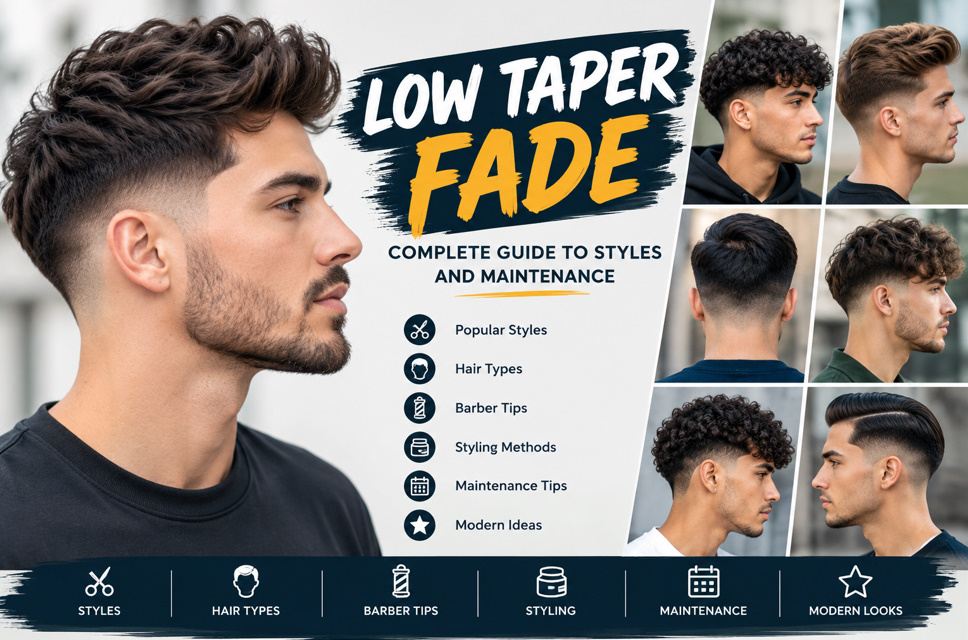
What Is a Low Taper Fade?
A low taper fade is a modern haircut that gradually shortens the hair around the sideburns, ears, and neckline. Unlike a high fade, the transition stays low on the head. This creates a clean and polished appearance while keeping more natural length and volume on the sides and top.
The low taper fade combines subtle blending with a versatile hairstyle on top. It can be paired with straight, wavy, curly, or coily hair. Because the taper is concentrated around the lower edges, it offers a neat appearance without creating an extremely dramatic contrast between the sides and top.
- Low fade placement
- Gradual hair transition
- Clean sideburns
- Tapered neckline
- Natural side volume
- Flexible top length
- Modern barber haircut
- Versatile everyday style
Low Taper Fade vs. Low Fade
A low taper fade and a low fade may sound similar, but they are not exactly the same. A low taper usually focuses on the sideburns and neckline, leaving more hair around the sides. A low fade generally extends the fading farther across the lower sides and back.
The difference becomes especially noticeable when the haircut grows out. A low taper often maintains a fuller appearance around the sides, while a low fade produces a more visible faded area. Understanding this distinction can help you communicate your preferred haircut clearly to a barber.
- Low taper stays lower
- Low fade covers more area
- Taper preserves side weight
- Fade creates stronger contrast
- Both have low placement
- Top length remains customizable
- Hair texture affects results
- Reference photos can help
Popular Low Taper Fade Styles
One of the biggest advantages of the low taper fade is its flexibility. The haircut can be combined with many different hairstyles on top, including textured crops, curls, waves, fringes, side parts, and messy styles. This makes it suitable for people who want a clean haircut without committing to one specific top style.
A low taper with textured hair can provide a relaxed appearance, while a side part can create a more polished finish. Curly hair can retain its natural definition, and longer hair can be styled backward or loosely. The taper acts as a clean foundation for different personal styles.
- Low taper with curls
- Textured low taper
- Low taper with waves
- Side-part taper
- Messy taper
- Fringe with taper
- Short crop taper
- Long-top taper
Low Taper Fade for Different Hair Types
The low taper fade works with a wide range of hair textures. Straight hair can create a smooth and clean silhouette, while wavy hair adds natural movement. Curly and coily hair can maintain their texture on top while the lower sides and neckline receive a precise taper.
Hair thickness can also influence the final result. Thick hair may create more visible contrast between the top and tapered areas, while finer hair may benefit from a carefully shaped top. A skilled barber can adjust the transition according to your hair density, growth pattern, and preferred style.
- Straight hair
- Wavy hair
- Curly hair
- Coily hair
- Thick hair
- Fine hair
- Dense hair
- Textured hair
Low Taper Fade and Face Shape
Face shape can influence how a low taper fade looks, but there is no single face shape required for this haircut. Because the style keeps additional length around the sides compared with some higher fades, it provides flexibility when creating a balanced overall hairstyle.
The top can also be customized to complement the desired appearance. More height, texture, or length can create a different visual silhouette, while a shorter top produces a compact finish. Oval, round, square, and rectangular face shapes can all work with different versions of this haircut.
- Oval face shape
- Round face shape
- Square face shape
- Rectangular face shape
- Balanced proportions
- Adjustable top length
- Customized styling
- Natural hair shape
How to Ask a Barber for a Low Taper Fade
When requesting a low taper fade, be specific about where you want the taper to begin and how short you want the lowest section. Simply asking for a “fade” may produce a different result from what you imagined. Mention the sideburns, neckline, sides, and preferred top length.
You can also explain whether you want a subtle taper or a sharper transition. If you want the sides to remain relatively full, tell your barber. Bringing a reference picture can make communication easier, especially when you want a particular combination of taper, texture, length, or neckline.
- Say “low taper fade”
- Mention sideburns
- Specify neckline length
- Explain top length
- Discuss side volume
- Choose the taper intensity
- Bring a reference image
- Confirm the desired finish
Low Taper Fade Maintenance and Styling
Maintaining a low taper fade mainly involves keeping the tapered areas and edges neat. Hair naturally grows at different rates, so the sharpness of the transition can gradually become less noticeable. The ideal trimming schedule depends on how quickly your hair grows and how polished you want the haircut to remain.
Styling the top is usually straightforward. Use a suitable hair product when you want additional texture, control, or definition. Curly hair can be styled to emphasize natural curls, while straight or wavy hair can be brushed, parted, or textured. Keeping the neckline and sideburns tidy also helps maintain the haircut’s clean appearance.
- Maintain the neckline
- Keep sideburns neat
- Schedule regular trims
- Use suitable hair products
- Work with natural texture
- Avoid excessive product
- Refresh the edges
- Maintain the top shape
Low Taper Fade Ideas for a Modern Look
Modern low taper fade hairstyles often combine clean barbering with natural-looking texture. A textured crop can provide a casual finish, while curls and waves can add movement. A natural fringe can create a relaxed appearance, whereas a side part can make the haircut look more structured.
The haircut is also adaptable to different settings and personal preferences. You can keep the top short for easier styling or maintain extra length for more options. Because the taper remains low, the finished haircut can look contemporary while still preserving a relatively natural shape.
- Textured crop
- Curly top
- Wavy top
- Natural fringe
- Side part
- Brushed-back hair
- Messy texture
- Clean neckline
Things to Consider Before Getting a Low Taper Fade
Before choosing a low taper fade, consider how much contrast you want between the sides and top. A softer taper preserves more natural side weight, while a closer taper can create a more noticeable transition. Your preferred appearance and daily styling routine should both influence the final haircut.
Hair texture, growth pattern, and maintenance preferences are also important. If you prefer low-maintenance styling, choose a top that naturally follows your hair’s direction. If you enjoy changing your hairstyle, keeping more length on top provides additional options. Clear communication with your barber can help achieve the desired result.
- Choose the taper height
- Decide the shortest length
- Consider hair texture
- Think about side volume
- Choose your top style
- Consider maintenance needs
- Bring hairstyle inspiration
- Discuss neckline shape