
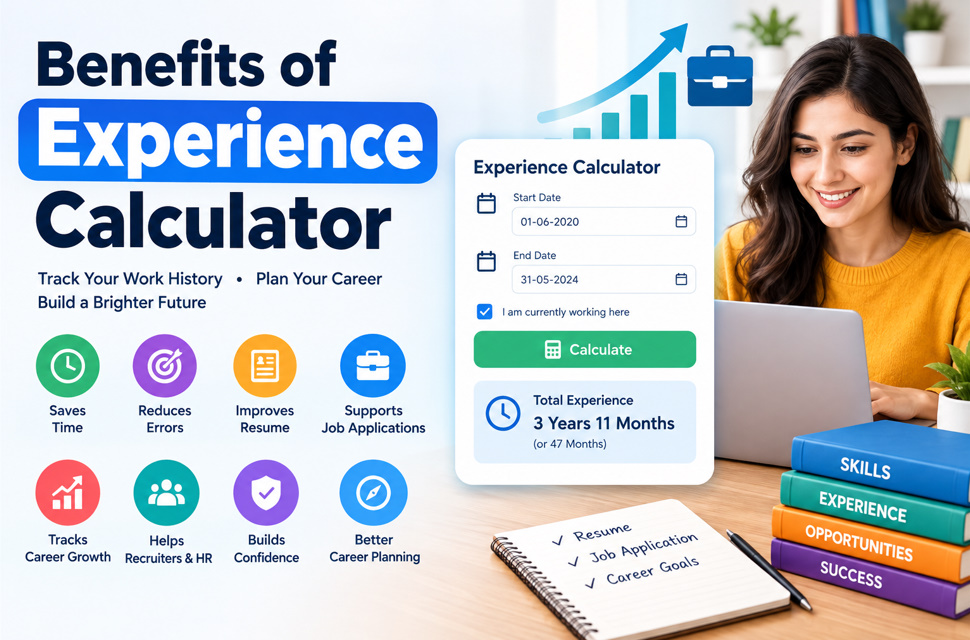
An Experience Calculator is a simple online tool that helps users calculate the total length of their professional experience. Instead of manually counting years, months, and days between employment dates, users can enter their starting and ending dates and receive a quick result.
Whether you are preparing a resume, applying for a job, completing an employment form, or reviewing your career history, an experience calculator can make the process faster and easier. It is particularly useful when someone has worked at multiple companies or held several positions over the years.
What Is an Experience Calculator?
An Experience Calculator is an online date-based tool designed to determine the duration between two employment dates. It can calculate experience in years, months, and days, making it easier to understand your overall professional timeline without performing complicated calendar calculations manually.
The tool is useful for employees, job seekers, recruiters, students, and professionals who need accurate work experience information. By entering the employment start date and end date, users can quickly estimate their career duration and organize their professional history.
- Calculates employment duration
- Uses start and end dates
- Shows years of experience
- Calculates months and days
- Simplifies date calculations
- Reduces manual counting
- Supports career planning
- Helps organize work history
How Does an Experience Calculator Work?
Using an experience calculator is generally straightforward. First, enter the date you started a job, internship, or other professional role. Then enter the relevant end date, or use the current date when calculating experience for an ongoing position. The calculator processes the calendar difference automatically.
Depending on the tool, users may also enter multiple employment periods. This feature is particularly valuable for professionals with experience across different companies. Instead of calculating every period separately, a suitable tool can help organize employment durations and determine a combined experience total.
- Enter your starting date
- Add your ending date
- Select the current date if needed
- Submit the information
- Review the calculated duration
- Add additional work periods
- Check the total experience
- Use the result for planning
Saves Time and Reduces Manual Calculations
One of the major benefits of Experience Calculator tools is time savings. Calculating employment duration manually can require counting months, considering different numbers of days, and checking leap years. An automated calculator handles these calendar details almost instantly.
For people with several jobs, manually calculating professional experience becomes even more inconvenient. An experience calculator provides a convenient alternative by processing dates automatically. This allows users to focus on career decisions rather than spending unnecessary time checking date differences.
- Saves valuable time
- Provides quick calculations
- Avoids repeated counting
- Handles calendar differences
- Simplifies complex dates
- Reduces calculation effort
- Improves productivity
- Gives immediate results
Improves Accuracy of Work Experience
Accurate work experience information can be important when preparing a resume or completing a professional application. Small mistakes in calculating employment duration may create inconsistencies between your stated experience and actual employment dates. An experience calculator helps minimize these avoidable errors.
The tool can be especially helpful when employment spans several months or years. Rather than estimating your experience, you can use exact dates to calculate the duration. This makes your professional timeline easier to verify and organize.
- Improves date accuracy
- Reduces human errors
- Prevents incorrect estimates
- Clarifies employment periods
- Supports accurate resumes
- Helps verify career history
- Simplifies professional records
- Creates consistent information
Helps With Resume and Job Applications
Job seekers can use an Experience Calculator when updating resumes, CVs, LinkedIn profiles, and employment applications. Knowing your precise experience duration can make it easier to present your professional background clearly and consistently.
Many job descriptions specify requirements such as two years, three years, or five years of relevant experience. Calculating your employment history accurately can help you understand whether your background meets a particular requirement. However, users should always follow the employer’s specific definition of relevant experience.
- Supports resume preparation
- Helps update CV information
- Organizes career timelines
- Clarifies total experience
- Assists job applications
- Helps review job requirements
- Improves professional organization
- Supports career decisions
Useful for Multiple Jobs and Career Changes
Modern professionals may work for several organizations, change careers, take internships, or move between full-time and part-time positions. Tracking these periods manually can become confusing. An experience calculator offers a simple way to review individual employment durations.
Multiple-date calculation is also useful when creating a complete professional timeline. Users can record when one position ended and another began, identify individual periods of employment, and better understand how their career has developed over time.
- Tracks multiple positions
- Organizes career changes
- Records employment periods
- Calculates individual durations
- Supports career transitions
- Helps review internships
- Simplifies professional timelines
- Makes history easier to understand
Supports Career Planning and Professional Growth
Understanding your accumulated experience can help with long-term career planning. An experience calculator provides a clearer picture of how long you have worked in different roles, industries, or professional areas. This information can help you evaluate your career progression and identify areas where additional experience may be valuable.
The tool can also support professional development decisions. For example, someone reviewing their career timeline may discover that they have substantial experience in one skill area but limited exposure to another. This can encourage more focused learning and career development.
- Supports career planning
- Reviews professional growth
- Identifies experience gaps
- Tracks career milestones
- Helps evaluate progress
- Supports skill development
- Encourages career reflection
- Improves professional awareness
Why Should You Use an Experience Calculator?
The biggest advantage of an experience calculator is convenience. It transforms a potentially confusing date calculation into a simple process. Users can enter employment dates and quickly understand the duration of their professional experience without relying on manual calendar calculations.
For beginners, the tool is particularly easy to understand because it requires little technical knowledge. Whether you are a student preparing your first CV or an experienced professional reviewing year of employment, an experience calculator can be a practical addition to your career toolkit.
- Easy for beginners
- Requires minimal effort
- Produces quick results
- Simplifies experience tracking
- Useful for professionals
- Helps students and graduates
- Supports job seekers
- Makes career records easier
Final Thoughts
An Experience Calculator is a practical tool for anyone who needs to calculate or organize professional experience. Its key benefits include saving time, improving accuracy, simplifying employment-date calculations, supporting resume preparation, and making career history easier to understand.
From calculating years of work experience to reviewing multiple employment periods, the tool provides a convenient way to manage career information. When combined with accurate employment records, it can become a useful resource for career planning, job applications, resume writing, professional development, and experience tracking.